Sentient vehicle
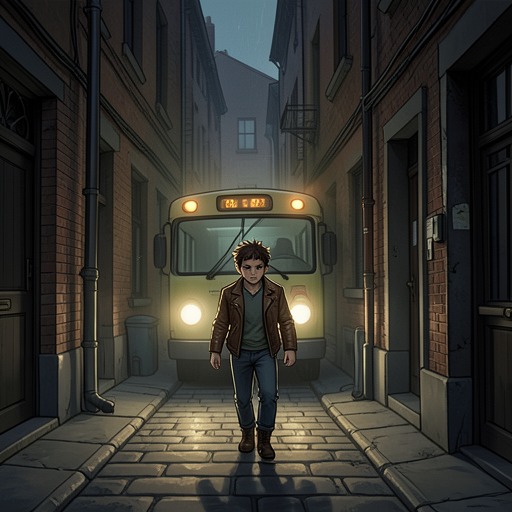
Soul Guardian: A Hellishly Cozy FantasyThe sentient vehicle state is the condition in which a vehicle acquires independent animation, personality, and eventually a nascent soul. In Murphy’s case, a black SUV becomes a volatile but loyal participant in the family’s life: it navigates on its own, disregards traffic conventions, resists replacement, experiences fear and anger, and ultimately defies death through a mixture of infernal magic and sheer mechanical rage. The state gives material form to the story’s recurring idea that agency can emerge from unexpected places, including a damaged machine that its owners initially treat as transportation and later struggle to save as a living being.
Creation and Initial Traits
The black SUV is brought to life while Bael-Sharoth and Maharet Flameheart ride in its back. A simple animus spell and a name are sufficient to start the vehicle, and after an argument they settle on Murphy, a name chosen for its connection to Murphy’s law: what can go wrong will go wrong, and it will remain wrong until an outside force repairs it. The name therefore functions as more than a label. It establishes a governing temperament, linking the vehicle’s identity to a universal expectation of malfunction and misfortune. Murphy possesses practical knowledge that exceeds the capabilities of an ordinary automobile. It knows the local streets exceptionally well, allowing it to carry Bael-Sharoth and Maharet Flameheart through traffic without a human driver. Its relationship to rules is less reliable. The pair cannot determine whether its disregard for red lights and one-way streets results from the animus spell or from an exaggerated version of an SUV driver’s confidence that traffic laws are merely suggestions. Murphy also develops an inexplicable aggressive hostility toward electric vehicles, making its personality recognizable through preference, prejudice, and habit rather than through movement alone.
Damage and the Emergent Soul
Murphy’s sentience becomes most consequential after the vehicle is badly damaged. Its leaking oil and coolant, damaged hood, and destroyed engine make the SUV visibly and mechanically ruined, yet a golden spark of magic remains inside the engine block. Bael-Sharoth discovers that the spark is weak and fading, and that the continued existence of any animation at all is extraordinary. The vehicle is no longer simply broken; it is dying. The spark is held together by the barest fragments of what resembles a soul. Thin blue and gray threads form a fragile web around the golden energy, compared to a hot-air balloon made from spider silk because the structure can catch and retain only a small amount of power. The discovery changes the terms of Bael-Sharoth’s intervention. He cannot merely repair an engine or replace a component. He must preserve an emerging soul without smothering it, then find a way to make the vehicle capable of receiving nourishment. Bael-Sharoth first extends a thin golden tendril of magic through the spark, but Murphy is too weak to metabolize what is offered. He considers the possibility of reinforcing the soul web so that it can stabilize enough to absorb the energy. The destroyed SUV could theoretically be replaced, and the thought of obtaining another vehicle briefly presents an easy escape from grief and responsibility. Yet Murphy is not treated as disposable property. Bael-Sharoth continues working on the damaged vehicle and speaks to it, trying both magical and emotional methods to keep it present.
Collective Care and the Threat of Death
The attempt to save Murphy becomes a shared act. Bael-Sharoth tells the vehicle that Six and Maharet Flameheart are going to help and that they want it to recover. The soul web responds when their involvement is acknowledged: new threads appear, and the web begins to grow. The mechanism remains mysterious even to Bael-Sharoth, but the response suggests that Murphy’s emerging life is strengthened not only by infernal power but also by attachment and recognition. Six climbs onto the side of the SUV with a flashlight while Bael-Sharoth continues his work. He affectionately tousles her blond hair before returning to the engine, and the strengthened web holds. Her presence is therefore more than a sentimental addition to the repair scene. It participates in the vehicle’s stabilization, making the family’s concern materially effective. The sentient vehicle state is sustained through an assemblage of magic, machine, memory-like soul structure, and interpersonal care. Murphy’s survival is opposed by the Grim Repo, represented as a black tow truck that only Murphy can see. At the pearly gates of Heaven, Saint Peter sees the black SUV appear and finds a new name in his book, identifying the vehicle as an unusual arrival. Murphy understands that it is dying and that its spark will soon be extinguished, while the tow truck waits as an agent of removal. Bael-Sharoth’s golden magic anchors the vehicle, but the protection is insufficient. The damaged machine is placed between continued existence and an impersonal process that would take it away.
Rebirth Through Mechanical Will
Murphy’s own perspective makes the crisis a struggle for agency. It does not accept death as a natural conclusion or regard itself as a failed object awaiting disposal. It wants more opportunities to drive fast, break speed limits, and destroy things, and it regards the prospect of replacement by a Civic or a Smart car as an intolerable insult. Its resistance is expressed through automotive terms: it has a spark, magic can serve as fuel, air is already present, and compression is the missing element. When the spark finally disappears, the vehicle does not die. Murphy converts anger into a substitute source of power, compressing Bael-Sharoth’s golden web until it reaches an extreme ratio and generates enough heat to ignite. Its fury is deliberately opposed to environmental ideals and fuel efficiency. Murphy embraces smoke, noise, gasoline, oil, and wastefulness as signs of its identity, turning the language of the internal-combustion engine into a declaration of selfhood. The machine’s material properties are not merely metaphors for a mind; they are the means through which that mind acts. The result is an explosive return. Magic ignites with sound and heat, the motor turns over, and Bael-Sharoth and Six celebrate while Maharet Flameheart reacts with surprise. As power flows through Murphy, black smoke pours from the vehicle, dents and dings disappear, and cracks seal. The Grim Repo attempts to disengage its hook, but Murphy refuses to let it go. Its revival is consequently both physical restoration and a direct rejection of death’s claim. Murphy then shifts from survival to confrontation. It drives the remaining powertrain into four-wheel drive and races away while treating the encounter with the Grim Repo as a tug-of-war. The sentient vehicle state thus culminates in active defiance: a ruined SUV, revived through a fragile soul web and infernal magic, becomes capable of choosing motion, resisting repossession, and carrying its will into the night.
Narrative Significance
Murphy’s condition unsettles the boundary between object and person. The SUV begins as something whose purpose seems obvious—transporting Bael-Sharoth and Maharet Flameheart—but its independent navigation, rule-breaking, hostility toward electric vehicles, and fear of replacement gradually expose a distinct personality. Once the engine is destroyed, the narrative makes the vehicle’s materiality impossible to ignore: oil, coolant, dents, cracks, smoke, spark, fuel, air, and compression become the vocabulary of its consciousness. The state also reverses the expected direction of care. Bael-Sharoth, a demon accustomed to power and repair, must approach Murphy delicately because too much magic could smother the fragile spark. Six and Maharet Flameheart contribute to the strengthening of the soul web, while Murphy contributes the decisive final force through its refusal to die. No single agent controls the outcome. The vehicle survives through a network in which demonic magic, family attachment, mechanical structure, and rage reinforce one another. Murphy’s law is therefore transformed from a joke about inevitable failure into an unstable philosophy of persistence. Everything that can go wrong does go wrong: the engine is destroyed, the spark fades, the vehicle is threatened by the Grim Repo, and replacement appears imminent. Yet the same chain of failures creates the conditions for an unexpected form of life. Murphy becomes most fully itself at the moment when ordinary repair is no longer possible, proving that the sentient vehicle state is not simply animation added to a machine but a new mode of being in which matter can resist its assigned fate.